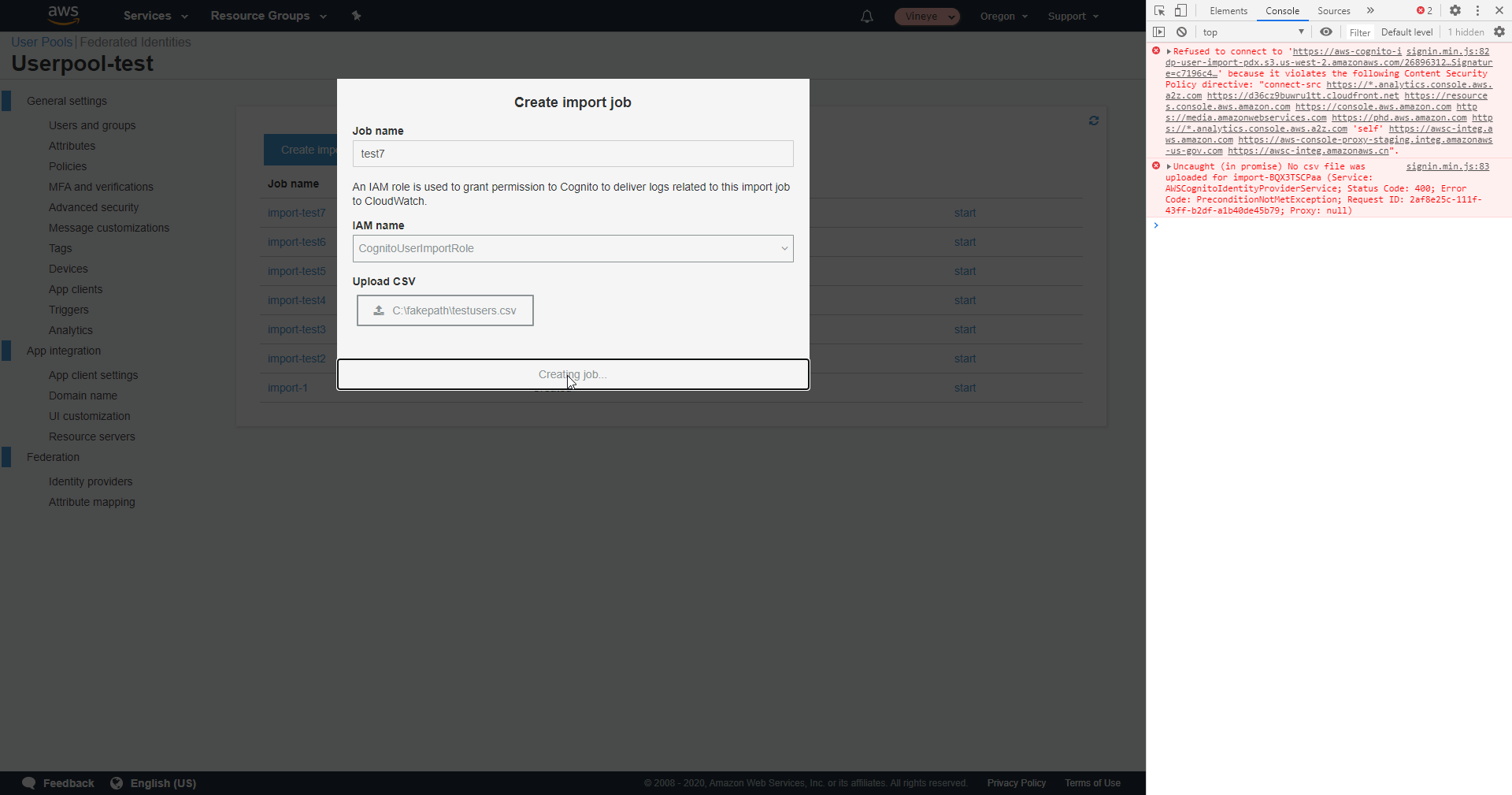
This looks like an error in the Cognito javascript.
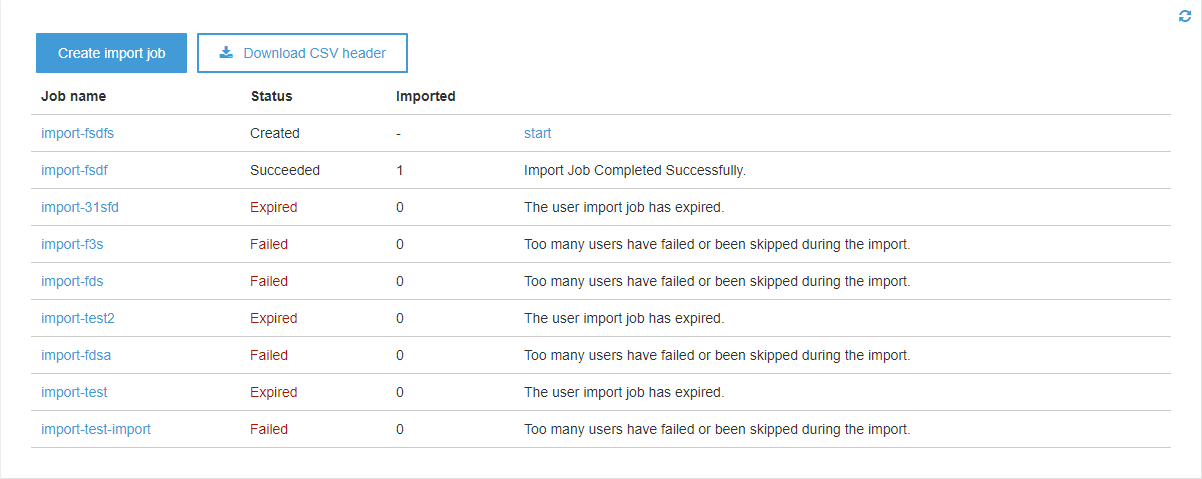
I’m pretty certain it’s not an issue with the CSV file; in the past, incorrect CSV files can still be uploaded but when you go to process it (by clicking Start), an error occurs in the web interface (the failed jobs show this):
The below relate to when I used Cognito a few years ago. It’s possible some have been fixed since.
Once you create a user pool, there are some settings that you can’t change ever again. Hope you got them right the first time!
I understand why you can’t export passwords (it would be worrying if you could), but you should be able to export password hashes. After all, they’re your users. If you want to migrate away from Cognito in future all of your users will have to reset their passwords.
In S3 policies you can give users access to objects with a prefix based on their Identity using ${cognito-identity.amazonaws.com:sub}. But if your Identity Pool is backed by a User Pool, there’s no way to relate this Identity back to a User. If you want to know who uploaded something, too bad.
Cognito Federated Identities is fine, but Cognito User Pools are horrible.
I have never understood how and why to use Federated Identities. Tried it multiple times but never got the reason (read the docs and product Page though).
Allow multiple sign-in methods. If you want to allow users to sign in with Facebook or Google, Federated Identities is how you do it.
Allow users direct (limited) access to AWS SDKs. For example, S3’s multipart upload functionality is great if you want to let users upload large files such as videos, especially since it has convenient client SDKs available for iOS, Android, browsers, and Node (Electron). Without Federated Identities your options are to either build your own multipart upload system, or use EvaporateJS’ funky presigned URL technique. (Which is really cool, but doesn’t have a native alternative for mobile)
In the simplest terms, and the one that is easiest for me to reason about:
Federated Identities only purpose is to give you short lived credentials for an IAM Role. You spec this IAM Role during the setup of the Federated Identity pool. You can use Cognito User pool, or a couple of different options like Facebook or whatever, but once you have that Identity from UserPool, you submit it to Federated Identity and it gives you IAM Role credentails back. This IAM role can be something like permission to upload to s3, or permission to query DynamoDB or permission to call an AppSync/APIGW API, etc, etc.
Other than that, the other reply you received is correct, but don’t think of it as having two purposes, it only has one - IAM Role credentials. It is able to give you those credentials once you have a login from a specified provider.